
Just an old cowboy trying to pass on some stories that folks might enjoy reading.










This five-book series is about the real story behind the arrival of cattle and horses on the tropical islands of Hawai'i. The historically accurate retelling of this great part of our history has been woven into a fictional story that will make history come alive with a fun, western feel. If you enjoy a good ol' cowboy story, you're gonna love these. Aloha
KAIKEA BOOKS
About the Author
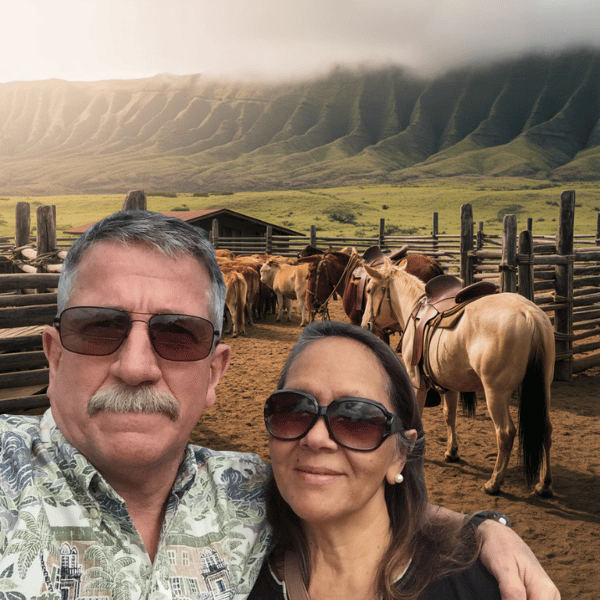
Randy Krause isn’t just writing stories or guides — he’s lived the life behind them.
A lifelong cowboy and craftsman, he’s worked cattle in Texas and Hawai‘i, from green-breaking horses to birthing calves on open lava fields. He’s medicated herds in the paddocks, slept beside them during storms, and learned the kind of lessons that only come from hard work and open country.
After years in the saddle, Randy built a new life in woodworking, opening Cabinets Hawaii, a successful custom cabinet and woodcraft shop known for quality and heart. Those same hands that shaped wood now build hydroponic systems designed to teach families how to grow food sustainably — anywhere, in any climate.
With over 30 years in construction, 10 years as a working paniolo on the Big Island, and five years mastering simple hydroponics in the Nevada desert, Randy brings practical know-how and old-fashioned values to everything he creates. His books blend real-world experience with a spirit of discovery — showing readers how to grow food, confidence, and connection through hands-on projects and stories of grit and hope.
Randy and his wife moved from Hawai‘i to the Nevada desert to raise their granddaughter, Ava, choosing family over convenience and trading the ocean for open sky. Today they work from home, building a small but growing publishing business that shares their love of learning, craftsmanship, and sustainable living.
THE PANIOLO SERIES

“The untold frontier story of Hawaiʻi’s legendary paniolo cowboys.”
When wild cattle overrun Hawaiʻi’s uplands, a new generation of riders rises to tame the land and become the first paniolo.

Across the harsh lava plains of Hawaiʻi, paniolo riders chase wild cattle and danger on a frontier few men dare to ride.

This is the prequel to The Paniolo Saga. It tells the story of what life was like for these three vaqueros working cattle in Alta, California before travelling to Hawai'i.

As the cattle kingdom grows, the king’s call for order and loyalty tests the courage of the women who also must guard and survive in this new frontier.

At the far edge of the Great Wall of Kuakini, one final reckoning will decide the fate of the paniolo and the land they fought to hold.
The True History of Hawaiian Cowboys is retold in an old-school western style that brings the stories to life.
The Hawaiian Islands have a long and proud ranching tradition. Long before most people ever heard the word paniolo, the uplands of Hawai‘i were home to skilled horsemen and cattlemen whose work helped shape the islands’ history.
The paniolo culture began in the early nineteenth century after cattle were introduced to the islands and eventually multiplied across the volcanic slopes. Skilled horsemen from Mexico were invited to Hawai‘i to help teach the local people the art of riding, roping, and managing wild cattle. Over time, Hawaiian cowboys developed their own style, blending Mexican vaquero traditions with Hawaiian language, culture, and values.
The stories you are about to read are works of fiction. While they are inspired by the spirit of those early paniolo and the ranching communities of Hawai‘i, the characters and events in this book are imagined for storytelling purposes.
Historical figures who played important roles in the development of ranching in Hawai‘i—such as John Palmer Parker—are part of the islands’ real history. These stories do not attempt to portray their actual lives or actions. Instead, the story captures the feeling of those early days when ranch life was growing across the Hawaiian uplands.
At its heart, The Paniolo Saga is a story about friendship, loyalty, courage, and the deep bonds that form between people, land, and animals.
If these books succeed at all, it is because they share a little of the spirit that still lives in Hawai‘i’s ranch country today.
Aloha.


Grow Fresh Food at Home — No Garden Required
In a world of rising food prices and uncertain supply chains, true security starts at home. Hydroponics For Every Home shows you how to grow fresh, healthy food right where you live—no soil, large yard, or prior experience required.
Author Randy Krause brings decades of hands-on experience growing in both Hawai‘i and the Nevada desert. With his practical, easy-to-follow approach, he breaks down hydroponics into simple steps anyone can master.
Inside this guide you’ll discover:
Simple hydroponic systems anyone can build
Solutions to common growing problems
Proven methods for abundant year-round harvests
Practical tips for beginners and busy families
Whether you're new to gardening or looking for a more reliable way to feed your family, Hydroponics For Every Home gives you the confidence to start growing today.
Fresh food. Greater independence. Right at home.
Grow Food. Spark Curiosity. Build Confidence.
Hydroponics isn’t just about growing plants — it’s about growing future scientists, engineers, and problem solvers.
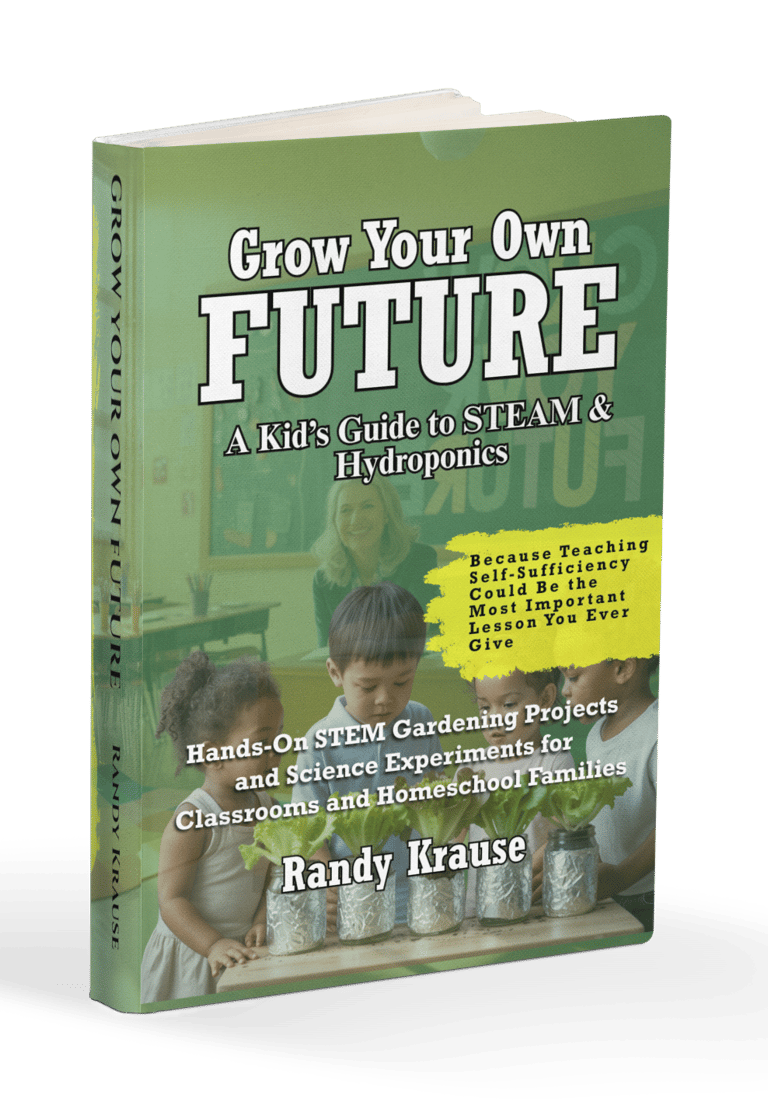
Grow Your Own Future: A Kid’s Guide to STEAM & Hydroponics is the perfect resource for teachers, homeschool families, and curious kids who want to explore science in a hands-on way.
Inside you’ll discover:
✅ Simple Hydroponic Projects — build Kratky jars, wick-fed planters, and small family systems using everyday materials.
✅ STEM/STEAM Learning Connections — each project links directly to science, technology, engineering, art, and math concepts.
✅ Kid-Friendly Science Vocabulary — clear definitions make new ideas easy to understand.
✅ Classroom & Homeschool Ready — activities designed for ages 8–12, with journaling prompts, growth charts, and discussion guides.
✅ Real-World Connections — from saving water in deserts to NASA experiments in space, hydroponics shows kids how science solves big problems.
Perfect for:
STEM and STEAM classrooms
Homeschool science curriculum
Hands-on learners who love experiments
Kids ages 8–12 curious about plants, food, and technology
Give your students (or your own kids) the tools to grow food, grow skills, and grow confidence — one project at a time.